















Howdy, Stranger!

It looks like you're new here. If you want to get involved, click one of these buttons!


Shells Virtual Desktop
BMail.ag - Secure Email Service
Server.net
CPLicense.net
VPS Server
Buy VPN
Vultr
VMs for AI
HostDare
ReliableSite White-Label Dedicated Hosting for Resellers
InterServer VPS
BMail.ag - Secure Email Service
Best VPN
High-Performance Bare Metal Server Solutions
Karvl.com
Server Mania Cloud Hosting
DataWagon Hosting
AlphaVPS Hosting
Evoxt.com
Clouvider
VPS Hosting with NVMe
Residential IPs in the US & 4G Mobile Proxies in EU & US with Unlimited Bandwidth
ReliableSite White-Label Dedicated Hosting for Resellers
Rabisu - Hosting Solutions
Shells Virtual Desktop
New on LowEndTalk? Please Register and read our Community Rules.

All new Registrations are manually reviewed and approved, so a short delay after registration may occur before your account becomes active.


About the Hardware Used by OVH

BeanzyBeanzy Member

Does OVH use brand-new hardware purchased directly from major hardware manufacturers, or does it assemble servers using second-hand, surplus hardware acquired from the market, as some data centers do?

Comments

  • IIRC, They build their own hardware

    Relevant Link: https://us.ovhcloud.com/about/server-production/

    Pasting info from the link:

    OVHcloud leverages its logistics expertise and a streamlined manufacturing process to deliver a server in less than an hour after it is ordered.

    1. Components Supply

    Each day, a minimum of four components are received at the Beauharnois data center.

    3 T of material a month.
    1 T of unused cables and unnecessary raw materials like cardboard packaging are recycled or resold. OVHcloud’s philosophy: 100% of our waste has value.

    Each component is carefully selected by the OVHcloud laboratories to design the optimal hardware architectures and deliver unparalleled robustness and reliability. These technological choices also serve to improve the recovery and switchover times, as well as high availability.

    1. Storage

    We have a one-month supply of components on hand during the manufacturing process. This allows OVHcloud to meet ongoing demands and production cycles.

    1. Manufacturing

    Servers are built five days a week and when necessary, nights and weekends. Our professional team and streamlined production approach allow for the assembly of eight components of a server in 15 minutes.

    1. Quality Testing

    Once built, servers are moved to a test lab where they are powered and connected to the network (through a temporary IP address), and then the proprietary water-cooling system inside the casing is filled with water. Servers are tested for 25 to 30 minutes. Automated quality assurance software controls the operation of each component.

    1. Assembly Process – IP Address

    In parallel with the manufacturing, the servers are provided an IP address and assigned a specific location inside the data center.

    1. Rack Assembly

    Once an IP address and a location have been designated, the servers are assembled in a fully powered, networked, water-cooled rack.

    1. Rack Transport

    Once these racks are complete, the hardware is transported from the production facility to the data center. Since production usually takes place in the data center, this is a short trip. For the US, however, our servers are transported from Canada.

    1. Installation in the Data Center

    Once at the data center, the racked servers are installed, powered, cooled, and ready for service!

    1. Ordering Options

    We have many options depending on the business needs. From the OVHcloud website, we have server options available that only take minutes to order. Choose your server, select the location, the configuration, and the operating system, and then confirm your order.

    Once the payment is verified, the delivery process begins to fulfill your order.

    1. Provisioning Your Server

    Once your order is complete, a server is allocated and then set-up depending on your specific configurations.

    1. Server Delivery

    You will receive the IP address of your server by email, as well as your user ID and password for the connection.

    1. Billing

    Invoices are sent via email and include the date and time your service was delivered.

    This date marks the start of your relationship with OVHcloud!

    Thanked by 1Beanzy
  • BeanzyBeanzy Member

    @whynotlearn I don't think so! The CPU, hard drive, RAM, and motherboard are all supplied by third parties, and they come with their own branded firmware. Especially the CPU—they can't manufacture those themselves.

  • @Beanzy said:
    @whynotlearn I don't think so! The CPU, hard drive, RAM, and motherboard are all supplied by third parties, and they come with their own branded firmware. Especially the CPU—they can't manufacture those themselves.

    Well they don't build the actual hardware themselfs, @whynotlearn was a bit wrong about that.

    They buy new current hardware and use that to assemble their normal lineups, like ADV, SCALE and so on or replace broken parts in all servers. Sometimes RISE also receives new hardware, like RISE-S and bigger SKUs. Obviously they don't buy new hardware for every order, as servers are reused after cancelation.

    They "recycle" their own used hardware every few years, by going through the ECO lineup, Kimsufi, SoYouStart and Rise. These were at some point now ADV or Scale and now replaced by the new lineups.

    Thanked by 1Beanzy
  • To answer the initial question, which I have not completly, I think.

    OVHcloud is too big to actually buy second hand on demand. I don't say that they never did or that they never will, but they have contracts with the supplier directly, for like memory or CPUs and so on.

  • whynotlearnwhynotlearn Member
    edited March 21

    @NotFoundException said:

    @Beanzy said:
    @whynotlearn I don't think so! The CPU, hard drive, RAM, and motherboard are all supplied by third parties, and they come with their own branded firmware. Especially the CPU—they can't manufacture those themselves.

    Well they don't build the actual hardware themselfs, @whynotlearn was a bit wrong about that.

    They buy new current hardware and use that to assemble their normal lineups, like ADV, SCALE and so on or replace broken parts in all servers. Sometimes RISE also receives new hardware, like RISE-S and bigger SKUs. Obviously they don't buy new hardware for every order, as servers are reused after cancelation.

    They "recycle" their own used hardware every few years, by going through the ECO lineup, Kimsufi, SoYouStart and Rise. These were at some point now ADV or Scale and now replaced by the new lineups.

    Agreed, Yea I didn't mean that they build these components themselves but rather that they buy these individual parts and assemble them together.

  • BeanzyBeanzy Member

    @whynotlearn said:

    @NotFoundException said:

    @Beanzy said:
    @whynotlearn I don't think so! The CPU, hard drive, RAM, and motherboard are all supplied by third parties, and they come with their own branded firmware. Especially the CPU—they can't manufacture those themselves.

    Well they don't build the actual hardware themselfs, @whynotlearn was a bit wrong about that.

    They buy new current hardware and use that to assemble their normal lineups, like ADV, SCALE and so on or replace broken parts in all servers. Sometimes RISE also receives new hardware, like RISE-S and bigger SKUs. Obviously they don't buy new hardware for every order, as servers are reused after cancelation.

    They "recycle" their own used hardware every few years, by going through the ECO lineup, Kimsufi, SoYouStart and Rise. These were at some point now ADV or Scale and now replaced by the new lineups.

    Agreed, Yea I didn't mean that they build these components themselves but rather that they buy these individual parts and assemble them together.

    Yes. They build their own servers.

    Thanked by 1whynotlearn
  • Most big data centers buy parts and then build them, as it is much cheaper, especially if they have some contracted suppliers.

  • BeanzyBeanzy Member

    @jonesolutions said:
    Most big data centers buy parts and then build them, as it is much cheaper, especially if they have some contracted suppliers.

    There are some low-cost service providers that specialize in purchasing used hardware to build servers.

  • CybrCybr Member
    edited March 21

    Not sure what their latest gen setups look like, or their highest end enterprise hardware configurations, but they buy new components and have always had custom minimal chassis configurations for most of their servers, which allow them to use cost effective hardware while keeping rack density high.

    Their racks are essentially just thin sets of rails which bare motherboards slot into. No standard cases, no standard coolers and no per-machine power supplies. They have huge central industrial DC power supplies and central proprietary closed-loop water cooling, and route power and water to all the racks of motherboards.

  • MikeAMikeA Member, Patron Provider

    @Cybr said: Their racks are essentially just thin sets of rails which bare motherboards slot into. No standard cases, no standard coolers and no per-machine power supplies. They have huge central industrial DC power supplies and central proprietary closed-loop water cooling, and route power and water to all the racks of motherboards.

    Ironically it looks amateur but their hardware is more reliable than most others from my experience.

  • BeanzyBeanzy Member

    @MikeA said:

    @Cybr said: Their racks are essentially just thin sets of rails which bare motherboards slot into. No standard cases, no standard coolers and no per-machine power supplies. They have huge central industrial DC power supplies and central proprietary closed-loop water cooling, and route power and water to all the racks of motherboards.

    Ironically it looks amateur but their hardware is more reliable than most others from my experience.

    That’s certainly true; I can certainly relate.

  • BeanzyBeanzy Member

    @Cybr said:
    Not sure what their latest gen setups look like, or their highest end enterprise hardware configurations, but they buy new components and have always had custom minimal chassis configurations for most of their servers, which allow them to use cost effective hardware while keeping rack density high.

    Their racks are essentially just thin sets of rails which bare motherboards slot into. No standard cases, no standard coolers and no per-machine power supplies. They have huge central industrial DC power supplies and central proprietary closed-loop water cooling, and route power and water to all the racks of motherboards.

    As long as it maintains good heat dissipation and stability, none of this matters to users.

  • conceptconcept Member

    Still remember watching this video.

  • BeanzyBeanzy Member

    @concept said:
    Still remember watching this video.

    :)

  • CybrCybr Member
    edited March 22

    @Beanzy said:

    @Cybr said:
    Not sure what their latest gen setups look like, or their highest end enterprise hardware configurations, but they buy new components and have always had custom minimal chassis configurations for most of their servers, which allow them to use cost effective hardware while keeping rack density high.

    Their racks are essentially just thin sets of rails which bare motherboards slot into. No standard cases, no standard coolers and no per-machine power supplies. They have huge central industrial DC power supplies and central proprietary closed-loop water cooling, and route power and water to all the racks of motherboards.

    As long as it maintains good heat dissipation and stability, none of this matters to users.

    I actually trust their custom proprietary configs more than standard ones, since instead of random models of random products which could have defects or flaws, everything has been careful engineered and has also been tested and proven at scale.

  • BeanzyBeanzy Member

    @Cybr said:

    @Beanzy said:

    @Cybr said:
    Not sure what their latest gen setups look like, or their highest end enterprise hardware configurations, but they buy new components and have always had custom minimal chassis configurations for most of their servers, which allow them to use cost effective hardware while keeping rack density high.

    Their racks are essentially just thin sets of rails which bare motherboards slot into. No standard cases, no standard coolers and no per-machine power supplies. They have huge central industrial DC power supplies and central proprietary closed-loop water cooling, and route power and water to all the racks of motherboards.

    As long as it maintains good heat dissipation and stability, none of this matters to users.

    I actually trust their custom proprietary configs more than standard ones, since instead of random models of random products which could have defects or flaws, everything has been careful engineered and has also been tested and proven at scale.

    To achieve high density, most of the products must be custom-made, right?

  • ralfralf Member

    @Beanzy said:
    @whynotlearn I don't think so! The CPU, hard drive, RAM, and motherboard are all supplied by third parties, and they come with their own branded firmware. Especially the CPU—they can't manufacture those themselves.

    I know Hetzner get custom motherboards from ASUS that are slightly modified for their needs, but based on regular retail boards. I wouldn't be surprised if OVH did something similar.

    Thanked by 1whynotlearn
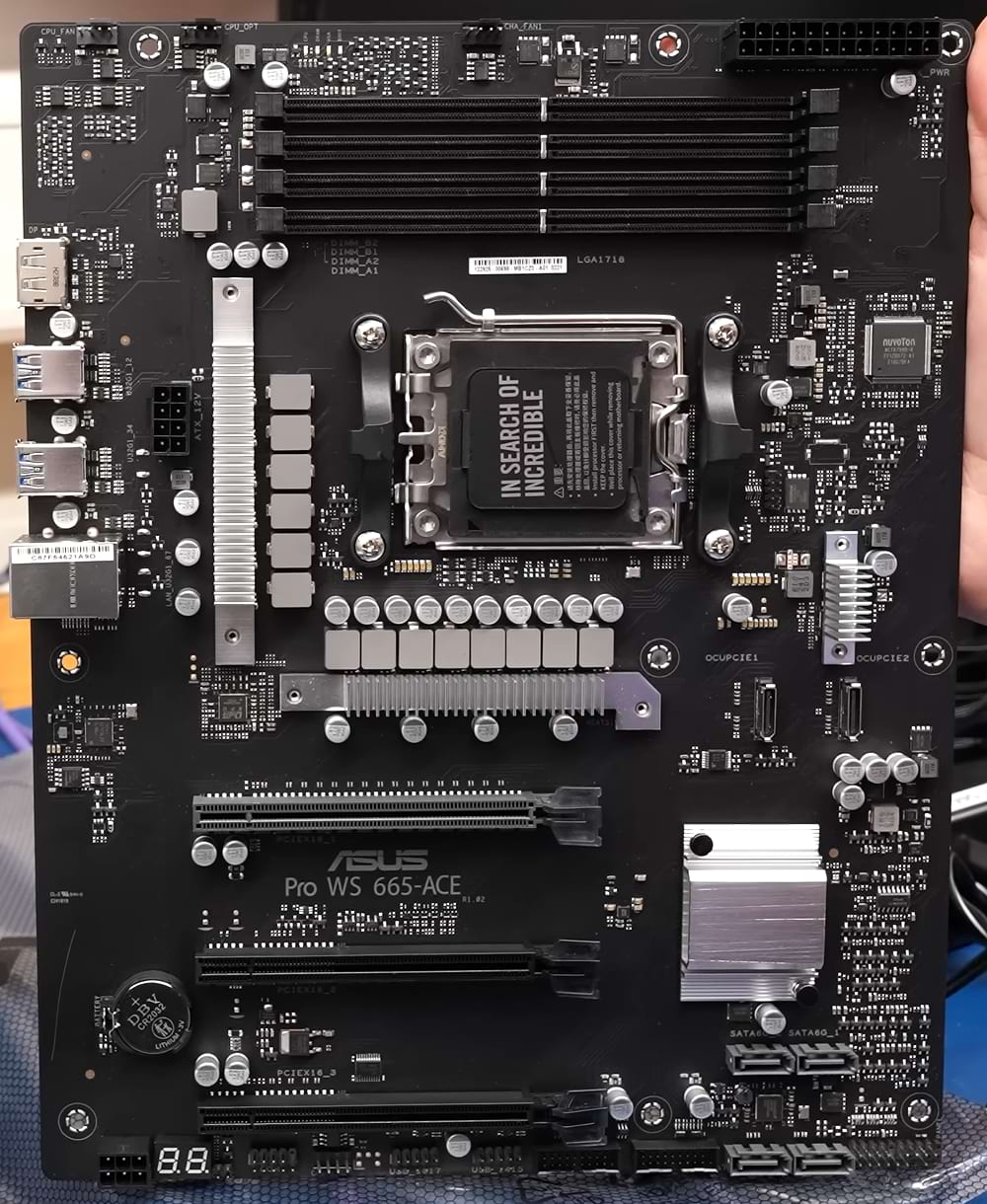
  • @ralf said: Hetzner get custom motherboards from ASUS that are slightly modified for their needs

    These:
    ASUS Pro WS 665-ACE

    Also ASRock: https://wccftech.com/amd-b665-chipset-powered-mainstream-workstation-am5-motherboards-from-asus-asrock-pictured/

Sign In or Register to comment.