






















Howdy, Stranger!

It looks like you're new here. If you want to get involved, click one of these buttons!


Shells Virtual Desktop
BMail.ag - Secure Email Service
Server.net
CPLicense.net
VPS Server
Buy VPN
Vultr
VMs for AI
HostDare
ReliableSite White-Label Dedicated Hosting for Resellers
InterServer VPS
BMail.ag - Secure Email Service
Best VPN
High-Performance Bare Metal Server Solutions
Karvl.com
Server Mania Cloud Hosting
DataWagon Hosting
AlphaVPS Hosting
Evoxt.com
Clouvider
VPS Hosting with NVMe
Residential IPs in the US & 4G Mobile Proxies in EU & US with Unlimited Bandwidth
ReliableSite White-Label Dedicated Hosting for Resellers
Rabisu - Hosting Solutions
Shells Virtual Desktop
New on LowEndTalk? Please Register and read our Community Rules.

All new Registrations are manually reviewed and approved, so a short delay after registration may occur before your account becomes active.

Do you trust QEMU-ga (and other things) installed on your linux VPS ?

2»

Comments

  • layer7layer7 Member, Host Rep, LIR

    Hi,

    deinstalling qemu-guest-agent is completely pointless if you do not at the same time install your system manually and encrypt it.

    It all boils down to:

    • Either you trust your hoster, then deinstalling qemu-guest-agent will only harm YOU as a customer as some UI functions of the hoster and also functions like snapshots will either stop working or work less optimal

    • Or you dont trust your hoster, then your hoster can still any time simply mount your data / partition and extract it the way he wants it. He can easily do that without that you will notify it using snapshots or what ever similar. The only way to render this pointless will be encryption on filesystem level.

    And even then, your key is in your RAM once the system was started. With enough criminal energy your hoster will be able to extract it from there. So even then he can access your files.

    The only real way to avoid this all would be to encrypt your files without real time encryption but with a one time encryption ( like giving a password on your what ever files ).

    But then you can only access them if you decrypt them by entering the password when you need it. Using a wrapper to handle this automatically for you will again bring the key into the RAM this or another way.


    So all in all:

    Either you trust or not. If you dont trust, dont host with this hoster.

    The only way to really avoid this is to take some bare metal where the hoster can not easily get the RAM content so you could work with a filesystem level real time encryption.

    And in all this story is the qemu-guest-agent actually your very smallest problem....

    Thanked by 3hakurin NetPIMP tentor
  • rm_rm_ IPv6 Advocate, Veteran
    edited July 2025

    @Rubben said: But, from what I know, the provider could still make a snapshot of your running vm in its LUKS unlocked state, then mount it and use it as if it didn't have LUKS to begin with right?

    No. Not as simple. "LUKS unlocked" doesn't mean that the disk content is all at once unencrypted. Just that the running VM kernel knows how to unencrypt the data it just read. And that of course depends on the encryption key stored in RAM, so you still need to dump and search for that, which you hoped to avoid. Then decode the data from disk yourself, using that key.

    @Rubben said: having your vm luks encrypted does not prevent or make it ANY harder for your host to snoop

    As described above, also not correct.

    Thanked by 1tentor
  • RubbenRubben Member

    @rm_ said:

    @Rubben said: But, from what I know, the provider could still make a snapshot of your running vm in its LUKS unlocked state, then mount it and use it as if it didn't have LUKS to begin with right?

    No. Not as simple. "LUKS unlocked" doesn't mean that the disk content is all at once unencrypted. Just that the running VM kernel knows how to unencrypt the data it just read. And that of course depends on the encryption key stored in RAM, so you still need to dump and search for that, which you hoped to avoid. Then decode the data from disk yourself, using that key.

    @Rubben said: having your vm luks encrypted does not prevent or make it ANY harder for your host to snoop

    As described above, also not correct.

    This is very insightful and thank you for correcting me. Makes me feel a bit more at ease, though I guess there's already 6 million backdoors to my chinese CCP sponsored vepees

    Thanked by 1JohnnySac
  • @Rubben said:

    @Motion3549 said:

    @Rubben said:

    @Advin said:
    The best way is to install with a custom ISO and use LUKS full disk encryption. However, even then, I believe it is still possible for a malicious hosting provider to dump memory and get the encryption keys.

    But, from what I know, the provider could still make a snapshot of your running vm in its LUKS unlocked state, then mount it and use it as if it didn't have LUKS to begin with right? They don't even need to mess with memory dumps right? So then what's the point of using LUKS?

    To slow down the admin's curiosity.

    Ok, I like your signature, we love ExtraVM.

    Anyway, but that's the point, it doesn't slow down the admin's curiosity because if he creates a snapshot of your running vm in its LUKS unlocked state (and let's be real, you won't have your server turned off much) then it's as if LUKS was never used. They could inspect it without any hassle or workaround needed.

    It's all a fake sense of security, having your vm luks encrypted does not prevent or make it ANY harder for your host to snoop in your gay porn files.

    Then we are all doomed.

  • eb1995eb1995 Member

    @Motion3549 said:

    @Rubben said:

    @Motion3549 said:

    @Rubben said:

    @Advin said:
    The best way is to install with a custom ISO and use LUKS full disk encryption. However, even then, I believe it is still possible for a malicious hosting provider to dump memory and get the encryption keys.

    But, from what I know, the provider could still make a snapshot of your running vm in its LUKS unlocked state, then mount it and use it as if it didn't have LUKS to begin with right? They don't even need to mess with memory dumps right? So then what's the point of using LUKS?

    To slow down the admin's curiosity.

    Ok, I like your signature, we love ExtraVM.

    Anyway, but that's the point, it doesn't slow down the admin's curiosity because if he creates a snapshot of your running vm in its LUKS unlocked state (and let's be real, you won't have your server turned off much) then it's as if LUKS was never used. They could inspect it without any hassle or workaround needed.

    It's all a fake sense of security, having your vm luks encrypted does not prevent or make it ANY harder for your host to snoop in your gay porn files.

    Then we are all doomed.

    I think of it as security, in case my server’s data gets dumped somewhere then that it means it’s not accessible to anyone.

    If I wanted to pick something secure it would probably be one of the big German providers along with LUKS. I feel like they are more likely to have some sort of audit system in place that employees would take seriously.

  • RubbenRubben Member

    @eb1995 said:

    @Motion3549 said:

    @Rubben said:

    @Motion3549 said:

    @Rubben said:

    @Advin said:
    The best way is to install with a custom ISO and use LUKS full disk encryption. However, even then, I believe it is still possible for a malicious hosting provider to dump memory and get the encryption keys.

    But, from what I know, the provider could still make a snapshot of your running vm in its LUKS unlocked state, then mount it and use it as if it didn't have LUKS to begin with right? They don't even need to mess with memory dumps right? So then what's the point of using LUKS?

    To slow down the admin's curiosity.

    Ok, I like your signature, we love ExtraVM.

    Anyway, but that's the point, it doesn't slow down the admin's curiosity because if he creates a snapshot of your running vm in its LUKS unlocked state (and let's be real, you won't have your server turned off much) then it's as if LUKS was never used. They could inspect it without any hassle or workaround needed.

    It's all a fake sense of security, having your vm luks encrypted does not prevent or make it ANY harder for your host to snoop in your gay porn files.

    Then we are all doomed.

    I think of it as security, in case my server’s data gets dumped somewhere then that it means it’s not accessible to anyone.

    If I wanted to pick something secure it would probably be one of the big German providers along with LUKS. I feel like they are more likely to have some sort of audit system in place that employees would take seriously.

    I hate german companies with a burning passion, but I'll give +1 for that.

    Thanked by 1eb1995
  • onidelonidel Member, Patron Provider, Top Host, Megathread Squad

    a few providers (including us) support enabling AMD SEV on VM which encrypts the VM memory. You can't take snapshot when SEV is enabled.

  • @raindog308 wrote a good article about this here: https://lowendbox.com/blog/how-private-is-your-hosted-data-really-even-that-encrypted-stuff/

    There's a related thread linked in the article as well.

    I think it's important to have this conversation, and have more people aware of the security and privacy implications of hosting. I have reasonable trust with the providers I order from, but it's good to make an informed decision and take precautions as needed.

    Thanked by 1xemaps
  • jsgjsg Member, Resident Benchmarker
    edited July 2025

    @Advin said:
    A lot of hosting providers also use Cloudinit, which can do similar things.

    The best way is to install with a custom ISO and use LUKS full disk encryption. However, even then, I believe it is still possible for a malicious hosting provider to dump memory and get the encryption keys.

    (a) seems to be also related to the systemd cancer, yuck.
    (b) of bloody course a provider who after all has full access to the node can, if evil and ill-willed enough - or with LEA agents breathing down his neck and potentially threatening his business - fully get at, look at, and/or even change each and every byte on a virtual machine.
    So even installing from ISO does NOT really protect you, but it at least makes it less easy and comfortable to eavesdrop on your VM, which also makes it less likely that some evil employee "by accident" looks into your VPS.
    And no disk/partition encryption does not really protect you completely because either the disk/partition is decrypted when starting your VM or the key is somewhere in memory.
    (c) Btw the same holds largely true on a dedi as well. Simple rule: anyone with physical access to your server can, provided he/she has sufficient knowledge and criminal energy (or LEA), get at, look at, and change your data. Plus obviously there is plenty of questionable IPMI stuff lurking.

    TL;DR Do not assume that only you can get at your data, no matter whether dedi or VM. The relevant point is (worst case physical) access to the server.
    But you can somewhat minimize the risk by installing from ISO.

    But then, is there really anything really safe and secure in IT nowadays?

    (This is in no way directed at Advin. He just happened to say something relevant and to trigger my post. The fact that he openly states that basically nothing really protects you IMO suggests that he is a decent guy)

    Thanked by 1xemaps
  • jsgjsg Member, Resident Benchmarker
    edited July 2025

    @onidel said:
    a few providers (including us) support enabling AMD SEV on VM which encrypts the VM memory. You can't take snapshot when SEV is enabled.

    Pardon me, but NO. While the idea is nice and probably was well intended, SEV & friends are broken too.

  • eb1995eb1995 Member

    @Rubben said:

    @eb1995 said:

    @Motion3549 said:

    @Rubben said:

    @Motion3549 said:

    @Rubben said:

    @Advin said:
    The best way is to install with a custom ISO and use LUKS full disk encryption. However, even then, I believe it is still possible for a malicious hosting provider to dump memory and get the encryption keys.

    But, from what I know, the provider could still make a snapshot of your running vm in its LUKS unlocked state, then mount it and use it as if it didn't have LUKS to begin with right? They don't even need to mess with memory dumps right? So then what's the point of using LUKS?

    To slow down the admin's curiosity.

    Ok, I like your signature, we love ExtraVM.

    Anyway, but that's the point, it doesn't slow down the admin's curiosity because if he creates a snapshot of your running vm in its LUKS unlocked state (and let's be real, you won't have your server turned off much) then it's as if LUKS was never used. They could inspect it without any hassle or workaround needed.

    It's all a fake sense of security, having your vm luks encrypted does not prevent or make it ANY harder for your host to snoop in your gay porn files.

    Then we are all doomed.

    I think of it as security, in case my server’s data gets dumped somewhere then that it means it’s not accessible to anyone.

    If I wanted to pick something secure it would probably be one of the big German providers along with LUKS. I feel like they are more likely to have some sort of audit system in place that employees would take seriously.

    I hate german companies with a burning passion, but I'll give +1 for that.

    Same here. I use them, very secure, but I don’t like them they are assuoles

  • xemapsxemaps Member

    Nice search on google : qemu-ga security

  • timmmytimmmy Member
    edited July 2025

    @xemaps said:
    Nice search on google : qemu-ga security

    hate to disappoint you but those results are influenced by your own browser activity
    and with range from past week ofc it will be top :D

    Thanked by 2JohnnySac layer7
  • @rm_ said:

    @Rubben said: But, from what I know, the provider could still make a snapshot of your running vm in its LUKS unlocked state, then mount it and use it as if it didn't have LUKS to begin with right?

    No. Not as simple. "LUKS unlocked" doesn't mean that the disk content is all at once unencrypted. Just that the running VM kernel knows how to unencrypt the data it just read. And that of course depends on the encryption key stored in RAM, so you still need to dump and search for that, which you hoped to avoid. Then decode the data from disk yourself, using that key.

    @Rubben said: having your vm luks encrypted does not prevent or make it ANY harder for your host to snoop

    As described above, also not correct.

    Years ago, we had an encrypted centos VM in ESXi. I used VMWares converter using root password to migrate to another ESXi server. It was no longer encrypted.

    But I think the standard rule is, if you got root password, you got it all anyway.

  • TimboJonesTimboJones Member
    edited July 2025

    @jsg said:

    @onidel said:
    a few providers (including us) support enabling AMD SEV on VM which encrypts the VM memory. You can't take snapshot when SEV is enabled.

    Pardon me, but NO. While the idea is nice and probably was well intended, SEV & friends are broken too.

    You could provide a link to actually be helpful instead of answering incorrectly "NO" to both his true statements.

    Thanked by 1vicaya
  • rm_rm_ IPv6 Advocate, Veteran

    @TimboJones said: I used VMWares converter using root password to migrate to another ESXi server. It was no longer encrypted.

    So? The "VMWare converter" script didn't know it was supposed to also create LUKS at the destination, likely just sshed into the source, then rsynced its filesystem which was of course mounted and readable to you when you ssh as root. Is that a ding on the LUKS security or what relevance that has.

    Thanked by 1jsg
  • TimboJonesTimboJones Member
    edited July 2025

    @rm_ said:

    @TimboJones said: I used VMWares converter using root password to migrate to another ESXi server. It was no longer encrypted.

    So? The "VMWare converter" script didn't know it was supposed to also create LUKS at the destination, likely just sshed into the source, then rsynced its filesystem which was of course mounted and readable to you when you ssh as root. Is that a ding on the LUKS security or what relevance that has.

    No, more of a PSA (I was fully expecting the migrated VM to boot to encryption prompt. That would need to be an offline migration through ESXi). Meant to show that if someone has your root password, LUKS ain't going to help in a running machine. So you still need all the usual protections for root.

  • @onidel said:
    a few providers (including us) support enabling AMD SEV on VM which encrypts the VM memory. You can't take snapshot when SEV is enabled.

    <3

  • lirrrlirrr Member

    just don’t snoop around my 500gb files and u gud
    this shit I could not care less

  • vicayavicaya Member

    @jsg said:

    @onidel said:
    a few providers (including us) support enabling AMD SEV on VM which encrypts the VM memory. You can't take snapshot when SEV is enabled.

    Pardon me, but NO. While the idea is nice and probably was well intended, SEV & friends are broken too.

    Early implementations (pre Zen3) like SEV and SEV-ES are broken. SEV-SNP (Zen3+) and TDX still stand. You can make tens of thousands USDs in bounty from AMD and/or Intel (for TDX) if you broke SEV-SNP and/or TDX.

    Unfortunately all the major offerings of confidential computing are undermined by providers, according to a recent survey paper (sponsored by German gov): https://arxiv.org/abs/2503.08256

    "Our findings reveal that all major cloud providers retain control over critical parts of the trusted software stack and, in some cases, intervene in the standard remote attestation process. This directly contradicts their claims of delivering confidential computing, as the model fundamentally excludes the cloud provider from the set of trusted entities".

    Will providers interested in providing confidential computing as intended, please respond positively either here or pm.

    Thanked by 3jsg xemaps tentor
  • jsgjsg Member, Resident Benchmarker

    @vicaya said:

    @jsg said:

    @onidel said:
    a few providers (including us) support enabling AMD SEV on VM which encrypts the VM memory. You can't take snapshot when SEV is enabled.

    Pardon me, but NO. While the idea is nice and probably was well intended, SEV & friends are broken too.

    Early implementations (pre Zen3) like SEV and SEV-ES are broken. SEV-SNP (Zen3+) and TDX still stand. You can make tens of thousands USDs in bounty from AMD and/or Intel (for TDX) if you broke SEV-SNP and/or TDX.

    Unfortunately all the major offerings of confidential computing are undermined by providers, according to a recent survey paper (sponsored by German gov): https://arxiv.org/abs/2503.08256

    "Our findings reveal that all major cloud providers retain control over critical parts of the trusted software stack and, in some cases, intervene in the standard remote attestation process. This directly contradicts their claims of delivering confidential computing, as the model fundamentally excludes the cloud provider from the set of trusted entities".

    Will providers interested in providing confidential computing as intended, please respond positively either here or pm.

    I'd put that somewhat differently: The newer ones aren't broken yet or at least not known to be broken, which isn't the same. Especially if one wants the bounty usually a "hold still and stay quiet" period has to be accepted. Which I can understand, after all we all are better off when it's published only once the manufacturer has a chance to provide mitigation.
    But it also means that "not known to be broken" != "not broken and safe".

    Also note the word "trust" in the title ...

    Thanked by 2xemaps tentor
  • vicayavicaya Member
    edited July 2025

    @jsg said:

    @vicaya said:

    @jsg said:

    @onidel said:
    a few providers (including us) support enabling AMD SEV on VM which encrypts the VM memory. You can't take snapshot when SEV is enabled.

    Pardon me, but NO. While the idea is nice and probably was well intended, SEV & friends are broken too.

    Early implementations (pre Zen3) like SEV and SEV-ES are broken. SEV-SNP (Zen3+) and TDX still stand. You can make tens of thousands USDs in bounty from AMD and/or Intel (for TDX) if you broke SEV-SNP and/or TDX.

    Unfortunately all the major offerings of confidential computing are undermined by providers, according to a recent survey paper (sponsored by German gov): https://arxiv.org/abs/2503.08256

    "Our findings reveal that all major cloud providers retain control over critical parts of the trusted software stack and, in some cases, intervene in the standard remote attestation process. This directly contradicts their claims of delivering confidential computing, as the model fundamentally excludes the cloud provider from the set of trusted entities".

    Will providers interested in providing confidential computing as intended, please respond positively either here or pm.

    I'd put that somewhat differently: The newer ones aren't broken yet or at least not known to be broken, which isn't the same. Especially if one wants the bounty usually a "hold still and stay quiet" period has to be accepted. Which I can understand, after all we all are better off when it's published only once the manufacturer has a chance to provide mitigation.
    But it also means that "not known to be broken" != "not broken and safe".

    Also note the word "trust" in the title ...

    As long as SEV-SNP could be implemented more trustworthy than your typical homelabs/laptops, which probably have way bigger combined hardware and software attack surfaces, it's worth our trust with some (not absolute of course) confidence.

    The fact that none of the major providers does it properly could imply that confidential computing in the hands of average users might be too powerful for mass surveillance.

    Thanked by 1xemaps
  • xemapsxemaps Member
    edited July 2025

    Could qemu-ga and other qemu files lead to prompt injection evasion ?
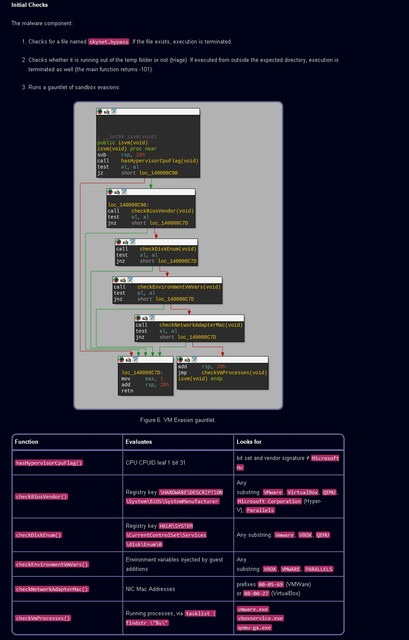
    Detected for the first time, malware attempts AI evasion by injecting a prompt to tell the LLM to label the file as benign

    Something interesting to read with this "skynet malware" in windows env.

    Source : Checkpoint Research, June 25, 2025

  • xemapsxemaps Member

    @vicaya said:
    As long as SEV-SNP could be implemented more trustworthy than your typical homelabs/laptops, which probably have way bigger combined hardware and software attack surfaces, it's worth our trust with some (not absolute of course) confidence.

    The fact that none of the major providers does it properly could imply that confidential computing in the hands of average users might be too powerful for mass surveillance.

    Are you saying that there aren't enough virtualization-trained technicians at providers to implement VPS servers?

  • vicayavicaya Member

    @xemaps said:

    @vicaya said:
    As long as SEV-SNP could be implemented more trustworthy than your typical homelabs/laptops, which probably have way bigger combined hardware and software attack surfaces, it's worth our trust with some (not absolute of course) confidence.

    The fact that none of the major providers does it properly could imply that confidential computing in the hands of average users might be too powerful for mass surveillance.

    Are you saying that there aren't enough virtualization-trained technicians at providers to implement VPS servers?

    According to the paper I cited above, the failure to implement CC properly across the major providers "arises from various factors, including legal obligations, operational constraints, and economic incentives, which ultimately influence how the architectures of the offered solutions are being designed". See section 5.5 for details.

    OTOH, it's actually fairly straightforward to implement CC as intended using 100% open source software on dedicated Zen3+ EPYC servers. It's interesting that none of the providers here even expressed any interest to provide the most trustworthy computing option that is already widely used in finance, healthcare, and defense sectors.

    Thanked by 1xemaps
  • xemapsxemaps Member

    @vicaya said:
    According to the paper I cited above, the failure to implement CC properly across the major providers "arises from various factors, including legal obligations, operational constraints, and economic incentives, which ultimately influence how the architectures of the offered solutions are being designed". See section 5.5 for details.

    OTOH, it's actually fairly straightforward to implement CC as intended using 100% open source software on dedicated Zen3+ EPYC servers. It's interesting that none of the providers here even expressed any interest to provide the most trustworthy computing option that is already widely used in finance, healthcare, and defense sectors.

    Here section 5.5 for people

    5.5.Identification of Root Causes Despite the promise of confidential computing to provide hardware-backed security guarantees for workloads running on untrusted cloud infrastructures, based on our findings, public cloud offerings are not capable of achieving this vision. Although the use of TEEs creates expectations of minimised trust dependencies, in practice, cloud providers retain significant control over key components of the system and its attestation. This discrepancy arises from various factors, including legal obligations, operational constraints, and economic incentives, which ultimately influence how the architectures of the offered solutions are being designed. When it comes to legal obligations, government entities may exert pressure on cloud providers to grant access to customer data. For instance, under legal frameworks like the U.S. CLOUD Act (CLO, 2018), service providers can be compelled to disclose data stored on their servers, regardless of the data’s physical location. This is also applicable to public sector organisations that often operate under stringent compliance requirements concerning data sovereignty and privacy. While intended to enhance security and compliance, arrangements set to meet these requirements can introduce additional trust dependencies that deviate from the pure confidential computing paradigm. The shortfalls we have identified in this paper might also be rooted in some operational constraints where part of the TCB within the TEE, i.e. virtual firmware, cannot be provided by cloud customers because of technical reasons or lack of resources and necessarily falls under the responsibility of the cloud provider. This unavoidably comes with some additional caveats, including transparency of the code used, centralised control over it, and lack of flexibility towards the cloud customer. Last but not least, in some use-case scenarios where multiple parties engage in collaborative computations, like anti-money laundering, collaborative drug development (Microsoft Azure, 2023) or privacy-preserving machine learning (Bogdanov et al., 2018), the primary concern often centres on protecting each entity’s proprietary data and code from other participants, rather than focussing on the cloud provider’s access. In such cases, the cloud provider is often considered a neutral party, and the emphasis is on ensuring that the collaborating entities cannot access each other’s sensitive information. Therefore, even though the parties involved in these computations are deeply concerned about certain security guarantees, their trust model does not necessarily exclude the cloud provider.

    Turn the wheel again. Do I understand that it tends to (or ends) to no more privacy in fact ?

  • vicayavicaya Member
    edited July 2025

    @xemaps said:
    Turn the wheel again. Do I understand that it tends to (or ends) to no more privacy in fact ?

    There are indeed strong corp & gov "incentives" to encroach on people's privacy. OTOH, the CC technology so far can already enable freedom/privacy loving people to achieve much better privacy than before. It only takes the will of people to implement it. The lack of provider interest here is kinda disappointing.

    Freedom and privacy is a matter of choice. More than ever.

    Thanked by 1MannDude
Sign In or Register to comment.