


























New on LowEndTalk? Please Register and read our Community Rules.
All new Registrations are manually reviewed and approved, so a short delay after registration may occur before your account becomes active.
All new Registrations are manually reviewed and approved, so a short delay after registration may occur before your account becomes active.
REAL DEALS HERE -- WIN BIG WITH THOUSANDS IN PRIZES + RackNerd's NEW YEAR OFFERS! (New Year 2024)
This discussion has been closed.



Comments
WAR - BATTLE OF BRITAIN MYTHS
Bomber Command played a minor role in the Battle of Britain
Winston Churchill’s speech in the British parliament on 20 August 1940 is well known: “Never in the field of human conflict was so much owed by so many to so few. All hearts go out to the fighter pilots, whose brilliant actions we see with our own eyes day after day.”
However, precisely what Churchill immediately afterwards asked us not to forget has been largely omitted in historiography on the Battle of Britain: “But we must never forget that all the time, night after night, month after month, our bomber squadrons travel far into Germany, find their targets in the darkness by the highest navigational skill, aim their attacks, often under the heaviest fire, often with serious loss, with deliberate careful discrimination, and inflict shattering blows upon the whole of the technical and war-making structure of the Nazi power.”
In fact, had it not been for the British bombings of Berlin from late August 1940 and onward, the Battle of Britain might have ended quite differently. The small-scale Berlin raids in 1940, carried out by a handful of bombers with totally inadequate navigational equipment, have been regarded as more or less meaningless pinpricks. But this disregards the main object of warfare: to destroy the enemy’s fighting spirit.
On 1 September 1940, American correspondent William Shirer (the US was, at that time, still a neutral country) wrote in his diary in Berlin: “The main effect of a week of constant British night bombings has been to spread great disillusionment among the people here and sow doubt in their minds. One said to me today: ‘I’ll never believe another thing they say. If they’ve lied about the raids in the rest of Germany as they have about the ones on Berlin, then it must have been pretty bad there.’”
The direct effect of these ‘pinprick’ raids was that Hitler ordered the Luftwaffe to stop attacking RAF Fighter Command’s ground organisation and instead start bombing London. It is commonly accepted that this was what saved Fighter Command from annihilation.
But RAF Bomber Command contributed to the victory in several other ways too. Through incessant nocturnal harassment raids, the RAF bombers disturbed the sleep of the German airmen, which – according to German reports – had serious consequences. The RAF bombers also wrought a great deal of havoc among the barges that made up the German invasion fleet, and, not least, helped to raise spirits among the hard-pressed British population.
WAR - BATTLE OF BRITAIN MYTHS
The twin-engined Messerschmitt Bf 110 was worthless as a fighter
Beginning in early September 1940, some German air units equipped with the twin-engined fighter plane Messerschmitt Bf 110 were withdrawn from the English Channel to be used as night fighters. Sometimes this has been regarded as a ‘degradation’ of the Bf 110.
In fact, under heavy pressure from Hitler and the German population to put an end to the night raids against Berlin and other German cities, Göring chose to use his very best fighter plane, the Bf 110.
This should come as a surprise to many, because a fairly common notion is that the Bf 110 didn’t suffice as a day fighter; that it performed poorly in combat; and because of this had to be assigned with fighter escorts of single-engined Bf 109s. However, none of this stands up to closer scrutiny.
The twin-engined, long-range fighter Bf 110 was the result of the war games conducted under Göring’s supervision in the winter of 1933/34. These showed that the prevailing view by then that “the bombers will always get through” – the notion that regardless of intercepting fighters and air defence a sufficient number of bombers always would get through to their assigned targets, where they were expected to cause enormous damage – was incorrect.
WAR - BATTLE OF BRITAIN MYTHS
Göring despised the German fighters
Göring has been accused of advocating these slow-flying, close escort missions. In reality, as protocols from Luftwaffe conferences show, things were exactly the opposite. No one advocated the German fighters to be unleashed on free hunting – where they were most effective – more strongly than Hermann Göring. The people who ordered the fighters to fly these close-escort missions were the commanders at the English Channel.
Göring, in fact, favoured the fighter pilots, quite contrary to what many of them have stated after the war, and he heaped medals and awards on them as with no other pilots.
WAR - BATTLE OF BRITAIN MYTHS
Myth: The German Bf 109 pilots were absolutely superior to the RAF’s fighter pilotsWhat, however, is fairly clear when one compares RAF fighter pilots with German airmen during the Battle of Britain is that the RAF pilots generally fought with a greater stamina than many of their opponents. While it was not uncommon to see a dozen RAF pilots climb to intercept a many times larger German formation in their relatively obsolete Hurricanes, whole German bomber formations could jettison their bombs when RAF fighters appeared, or German fighter pilots would be satisfied with one gunnery run at a British formation. There also were several cases when RAF pilots deliberately rammed an enemy aircraft.
In recent years, it has been popular to revise the Battle of Britain in a way that gives the impression that the German Bf 109 pilots were absolutely superior to the RAF’s fighter pilots. Of course, some of the most experienced Luftwaffe pilots – such as Adolf Galland and Werner Mölders – had accumulated a far greater experience than most RAF pilots. But a comparison between British and German pilot training shows that they were of about equal standard.
By comparing RAF fighter losses with the number of lost Bf 109s, some writers have in recent times drawn the erroneous conclusion that the Bf 109 units on average shot down two RAF planes for each own loss. By revealing the number of RAF aircraft that were shot down by Bf 110s, this conclusion proves to be utterly false.
The ‘revisionist’ version of the Battle of Britain, according to which the courage and efforts made by the RAF airmen is ‘exaggerated’, also does not stand up to scrutiny. It is beyond any doubt that without the unparalleled courage and efforts by ‘The Few’, and the contribution made by the RAF bomber crews, the Battle of Britain would not have been won.
WELCOME TO PAGE 115 - THE PAGE OF WAR !!!
Next up, here are some facts about Dunkirk that you probably didn't know. BTW, if you haven't yet watched the movie, do watch it, it's good - https://www.imdb.com/title/tt5013056/
WAR - DUNKIRK FACTS
What happened?
On 10 May 1940, Adolf Hitler began his long-awaited offensive in the west by invading neutral Holland and Belgium and attacking northern France. Holland capitulated after only five days of fighting, and the Belgians surrendered on 28 May. With the success of the German ‘Blitzkrieg’, the British Expeditionary Force (BEF) and French troops were in danger of being cut off and destroyed.
To save the BEF, an evacuation by sea was organised under the direction of Admiral Bertram Ramsay. Over nine days, between 26 May and 4 June 1940, warships of the Royal and French navies together with civilian craft successfully evacuated more than 338,000 British and Allied troops from the beaches of Dunkirk, in the remarkable Operation Dynamo.
The success of the evacuation strengthened not only Britain’s defences in the face of a German invasion threat, but also Churchill’s position against those like the foreign secretary, Lord Halifax, who favoured discussing peace terms. Seventy years later, Dunkirk is still synonymous with refusing to give up in times of crisis.
WAR - DUNKIRK FACTS
Britain had the only 100 per cent mechanised army in 1940
Britain in the early years of the war has often been perceived to have been full of Blimpish commanders, out-of-date equipment and antiquated, stuck-in-the-mud tactics.
In fact, the British Army’s equipment in 1940 was certainly a match for that of the Germans. The Bren light machine-gun did not have the rate of fire of the German MG34, but was solid, accurate, and more dependable than its far friskier German rival. Meanwhile, the new British uniforms were the most modern in the world at the time, and unlike anything any soldier had worn before.
The British Expeditionary Force (BEF) was also entirely mechanised, which was certainly not the case for the German Army. In fact, of the 135 German divisions used in the attack in the West, only 16 were mechanised; the other 119 used horses and their soldiers' own two feet. British tanks were mostly superior to those of the German Army too, and while they had not invested as heavily in radio as the Germans, the BEF still had proportionally considerably more radio sets than the French.
WAR - DUNKIRK FACTS
There were no telephones at French Army headquarters
Until he was fired on 19 May (following the catastrophic collapse of the Meuse Front), General Maurice Gamelin was commander-in-chief of all French and British forces in France. He was also the overall architect of plans to defeat any German attack. Gamelin firmly believed any future war would be much like the previous one of 1914-18: long, drawn-out and largely static war of attrition.
He was half-right, or half-wrong, depending on which way one looks at it. The Second World War lasted longer than the First World War. While it was a war of attrition in many ways, it was not static. The German approach was always to try and win battles and wars swiftly and with considerable skill of manoeuvre. This was a strategy forced upon them by their fundamental lack of resources. In this regard, little had changed since the days of Frederick the Great. By the Second World War, however, Germany had harnessed radio technology to these age-old principles to very great effect.
In contrast, the French had largely eschewed radio technology in favour of landline telephones and traditional dispatch riders. At his headquarters on the edge of Paris, Gamelin insisted there should be no telephones at all, such was his paranoia of a security break. This meant he was repeatedly and fatally out of touch with his commanders at a time when swift and rapid decision-making was essential.
With German artillery and the Luftwaffe also repeatedly cutting phone lines, the French were ever more dependent on dispatch riders, who were forced to battle through roads clogged with refugees. Often they became lost, took too long, or failed to return altogether. Inevitably, the French Army ground to a halt, unable to move or respond to the rapidly unfolding situation.
WAR - DUNKIRK FACTS
The Luftwaffe suffered its worst day
It is widely accepted that the Germans had it pretty much their own way from the moment they launched Case Yellow (the invasion of France and the Low Countries) on 10 May 1940. Spearheading the attack and apparently ruling the skies was the Luftwaffe, with its mix of screaming Stuka dive-bombers, Messerschmitt fighters and Heinkel and Dornier medium bombers.
However, that first day of the campaign was the worst the Luftwaffe suffered for some three years. A staggering 353 German planes crashed or were shot down. (To put that in perspective, the worst day for the Luftwaffe in the Battle of Britain saw them lose 67 aircraft). Most were transports bringing in airborne troops, but these Junkers 52s had only been brought to bear by scouring training schools and their losses severely set back aircrew training. In fact, the Luftwaffe had still not made good on its losses by the time they invaded the Soviet Union the following June.
WAR - DUNKIRK FACTS
The game-changing ‘eastern mole’ was discovered purely by chance
The Senior Naval Officer tasked with overseeing the shore end of the Dunkirk evacuation was Captain Bill Tennant. Tennant arrived on the afternoon 27 May, and had been told they might be able to evacuate 45,000 troops if he were lucky. The harbour facilities had been smashed and the port's quays were unusable, so Tennant signalled back to Dover asking for every available craft, no matter how small, to sail to Dunkirk to help lift men from the beaches.
Getting men onto boats and ships direct from the beaches was an incredibly slow and laborious process. The situation looked bleak. Later that same evening, though, Tennant noticed the Luftwaffe had not hit the two long moles [wooden breakwaters] that extended some 1,600 yards out into the sea. There was no obvious way of reaching the western mole across the harbour's mouth, but the eastern mole began from the harbour wall and was easily accessible.
Made of latticed concrete piles and topped by a narrow wooden walkway, it was a breakwater rather than a jetty. While at first glance it looked as though it was not strong enough to take a moored ship alongside, Tennant felt there was nothing to lose from trying. The cross-Channel steamer, Queen of the Channel, was called to test it and after gently nudging her stern against the concrete piles, managed to drift alongside. The mole withstood this strain without any obvious difficulty.
WAR - DUNKIRK FACTS
The Battle of Britain began over Dunkirk
Officially, the Battle of Britain began on 10 July 1940. (This was the date given by Hugh, the commander-in-chief of RAF Fighter Command. Yet as Dowding admitted, as far as he was concerned, it began the day Britain entered the war.)
However, RAF Fighter Command was created to defend Britain and first entered the fray over Dunkirk and the Pas de Calais on 20 May 1940. The Luftwaffe had been given a lead role in preventing the evacuation and Fighter Command more than played their part in ensuring German air forces failed in their task. Few on the ground saw them as the sky was filled with low cloud. Thick, black smoke from burning oil storage tanks rose to some 15,000 feet and spread across the entire area. They were there, nonetheless, and managed to shoot 326 enemy aircraft during the operation, while losing of 121 of their own.
WAR - DUNKIRK FACTS
Logical military thinking played no part in Hitler’s decision to issue a halt order
On 24 May, Hitler issued his infamous order for his panzer divisions [armoured tank divisions] to halt, denying them the chance to completely encircle the retreating British Expeditionary Force. Ever since the order, there has been speculation as to Hitler’s motives. It has even been suggested that he wanted to give the British a chance to escape.
The truth is more straightforward, and underlines Hitler’s utter ineptitude as a military leader. After all, he never went to staff college [to train as a military officer] and was ill-qualified to be making high-level military decisions in almost every regard.
The initial halt order was issued by General von Kleist on 23 May. He did not understand new mobile panzer tactics and feared his armoured tank divisions were getting too far ahead of the foot-slogging infantry. This order – which was to be in place for 24 hours – was reinforced by Field Marshal von Rundstedt. When General Halder, army chief of staff, heard about the order, he immediately rescinded it and furthermore transferred all panzer divisions to rapidly close in on Dunkirk from the north. Von Rundstedt, piqued to have been humiliated by Halder, complained to Hitler.
Hitler, who had been told nothing of all this beforehand, exploded with anger. He hated the Prussian military elites, and was deeply suspicious of the army leadership. Clearly, they needed to be taught a lesson. He immediately countermanded all Halder’s decisions and gave the authority to lift the halt order back to von Rundstedt. Logical military thinking played no part in Hitler’s decision, rather, it was motivated by a determination to show who was boss and stamp his authority on his subordinates. But in so doing, Hitler very possibly lost the war.
Britain’s army may have been small in 1940, but on 27 May, the country came its closest to defeat. Foreign secretary Lord Halifax and new prime minister Winston Churchill argued over whether Britain should put out peace feelers. Halifax briefly threatened to resign, which almost certainly would have brought down the government. Churchill insisted that even putting out feelers would be crossing a Rubicon from which there could be no return. He won the day, but had the BEF been lost, the outcome may well have been very different. The halt order was not lifted until late on 26 May, and no panzers began moving again until the following morning – by which time the perimeter at Dunkirk had been secured and the evacuation had begun.
WAR - DUNKIRK FACTS
An England cricket captain was among those rescued at Dunkirk

Among those rescued at Dunkirk was former England cricketer, Douglas Jardine, who had captained the national side back in 1932–33. Jardine had retired from cricket in 1934, and although he was a qualified lawyer, made his living from journalism and writing. In August 1939 he joined the Territorial Army and then was commissioned into the Royal Berkshire Regiment on the outbreak of war a few weeks later. He was then sent to France with the BEF.
Jardine served well, but was wounded in fighting near Dunkirk. He became separated from most of his men, making him among the last in his battalion to be lifted. Ironically, the ship that took him home was a destroyer called the HMS Verity. Jardine’s greatest friend during his England cricketing days had been the Yorkshire bowler, Hedley Verity, who had even named his son Douglas after his friend. Verity was less lucky – he was mortally wounded in Sicily in July 1943 leading his company in an assault on German positions.
WAR - DUNKIRK FACTS
The last British soldier to leave Dunkirk was a Major-General
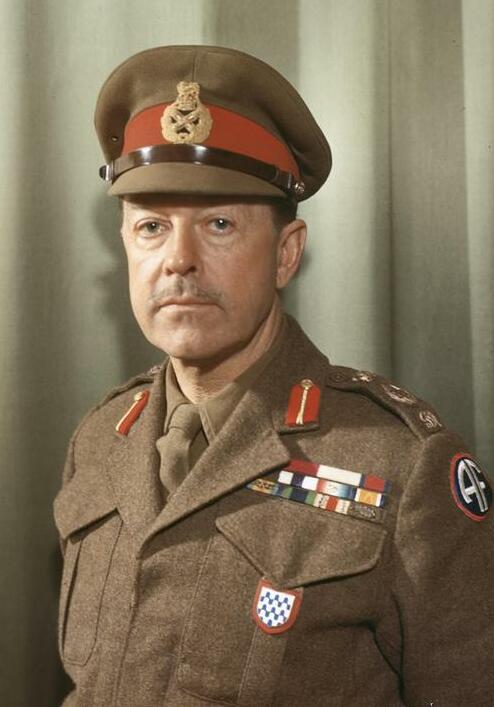
The last British soldier to leave Dunkirk was not a member of the rank and file but rather Major-General Harold Alexander. Alexander had taken over as acting commander of the BEF on 31 May. His imperturbability was legendary, and he was given the task of overseeing the last stages of the evacuation.
The last British troops began boarding at around 9pm on Sunday 2 June. By this time, the perimeter had collapsed. Although French troops were still heroically defending the town, German artillery was raining down on the harbour. At 11.30pm, Alexander, along with Captain Bill Tennant, boarded a motor launch and began a last tour of the harbour and then the length of the beaches as far as Bray Dunes, calling out to any last remaining troops. They heard no replies; all that remained were the silhouettes of abandoned vehicles. Satisfied they had fulfilled their task, they signalled, “BEF evacuated. Returning now”. Then they, too, set sail for England.
WAR - DUNKIRK FACTS
Many British vehicles abandoned at Dunkirk ended up in Russia
Although not a single British soldier was left on the Dunkirk beaches, some 70,000 troops were left behind in France, either dead, wounded, prisoner or still stuck further south. The British also left behind 76,000 tons of ammunition, 400,000 tons of supplies and 2,500 guns. On top of that, a staggering 64,000 vehicles were abandoned. This was a salivatingly large number for the vehicle-short Germans. Although many of those left at Dunkirk had sand poured into the radiators and fuel tanks, a large proportion were salvageable and were used again.
In fact, many of them went on to provide sterling service to the Wehrmacht and a large number ended up crossing into the Soviet Union a year later as part of the German invasion, Operation Barbarossa. By then, the German Army was using some 2,000 different vehicles, all of which required different parts, from gaskets and distributors to fuel pumps. Needless to say, of those British vehicles that did make their way to the USSR, very few ever headed west again.
Now, most of us have learned most of our history not from books, but, from movies. Isn't that right? So, here are a few movies that capture the life of common citizens and soldiers during the 2nd World War.
WW2 MOVIES
Schindler’s List (1993)
Despite being a mainstream Hollywood movie, Steven Spielberg’s haunting Schindler’s List broke new ground for its unflinching portrayal of the horrors of the Holocaust.
The multi-award-winning film recounts the extraordinary real-life actions of Oskar Schindler, an industrialist and Nazi party member believed to have saved the lives of around 1,200 Jews during the Holocaust. Schindler recruited Jewish workers to his factories in Nazi-occupied Poland and bribed Nazi officials to protect them from deportation to concentration camps. He is believed to have made a total of seven lists filled with the names of those he intended to save, four of which still survive today.
Spielberg was drawn to the story by Thomas Keneally’s 1982 Booker Prize-winning novel, Schindler’s Ark. "It was a dry, dry book," Spielberg told the New York Times. "I thought if I could take that approach with a motion picture, I could present it almost like a series of events, facts and dates. And the emotionality would be much stronger". Spielberg chose to shoot the film almost entirely in black and white. His crews also filmed at many of the real locations, including the gates of Auschwitz.
The film’s shocking subject matter was close to home for Spielberg, whose own relatives were murdered in Poland and Ukraine during the Second World War genocide. After refusing any salary for directing the film, in 1994 he used the movie’s profits to found the USC Shoah Foundation (originally named the Survivors of the Shoah Visual History Foundation). A not-for-profit organisation that has collected and preserved more than 54,000 video testimonies from Holocaust survivors, the foundation is intended to educate future generations about the genocide.
Reel vs real: https://screenrant.com/is-schindlers-list-a-true-story/
WW2 MOVIES
The Great Escape (1963)

With its stellar cast, thrilling action sequences and inimitable theme song, The Great Escape has certainly earned its place as a stalwart of British Christmas television scheduling. Depicting the daring 1944 escape made by Allied airmen from a German Prisoner of War (PoW) camp, the 1963 film is an iconic – if somewhat bombastic – celebration of wartime bravado, heroism and derring-do.
The film is largely based on a 1950 book by former Australian PoW Paul Brickhill, a fellow prisoner at Stalag Luft III whose severe claustrophobia prevented him from taking part in the escape.
The true events behind the film certainly had all the drama, tension and tragedy a Hollywood movie producer could wish for. Organised by RAF squadron leader Roger Bushell (the inspiration for the film’s ‘Roger Bartlett’ character, played by Richard Attenborough) and designed to disrupt their Germans captors as much as possible, the escape saw Allied PoWs dig three escape tunnels. Known as Tom, Dick and Harry, the tunnels were intended to reach more than 300ft under the camp boundaries to the woods beyond. On the night of 24 March 1944, some 76 men made their audacious escape from the Stalag Luft III camp, but within a matter of days, 73 escapees had been recaptured. Angered and embarrassed by their actions, Adolf Hitler personally ordered for 50 of them to be shot.
Many aspects of the escape depicted in the film reportedly reflect reality, such as the elaborate preparations undertaken, the huge number of PoWs involved and the nerve-shredding moment the tunnel came up short and escapees had to run to the trees over open ground. However, some of The Great Escape’s most memorable moments are undeniably based more on ‘box office appeal’ than historical fact, such as Steve McQueen’s audacious motorbike chase as all-American hero Virgil Hilts (a fictional character – no US soldiers were involved in the real escape). This sequence did not appear in the original script – it was reportedly added in to soothe the ego of Steve McQueen, who kicked up a fuss about the size of his part and demanded more screen time. On the film’s release, the iconic sight of McQueen’s bike flying triumphantly over barbed wire was deemed so preposterous that former PoWs booed in the cinemas.
Despite several film companies initially being reluctant to back The Great Escape (perhaps due to the lack of a glamorous female love interest), it was one of 1963’s box office hits. Indeed, the film has gone on to become a much-loved classic of Second World War cinema – in the words of a 1963 Time Magazine review: “The Great Escape is simply great escapism”.
Reel vs real: https://www.history.co.uk/article/the-true-story-of-the-great-escape
WW2 MOVIES
Flags of Our Fathers (2006)
The life stories of the six men who raised the flag at the Battle of Iwo Jima, a turning point in World War II.
Reel vs real: https://www.npr.org/2006/10/19/6345777/flags-of-our-fathers-stays-true-to-history
WW2 MOVIES
Letters from Iwo Jima (2006)
The story of the battle of Iwo Jima between the United States and Imperial Japan during World War II, as told from the perspective of the Japanese who fought it.
Reel vs real: https://www.ipl.org/essay/Analysis-Of-The-Film-Letters-From-Iwo-P3KVZ7HEACP6
WW2 MOVIES
Das Boot (1981)
Claustrophobic yet compelling, Das Boot depicts life onboard a German U-Boat submerged in the depths of the Atlantic.
It’s 1942 – the war is beginning to turn against Hitler and the Third Reich’s propaganda is wearing increasingly thin. The audience’s insight into the action comes from Lt Werner, an enthusiastic yet naïve war correspondent assigned to report on the submarine’s progress. In contrast, the U-boat’s war-weary captain (reportedly based on real-life U-boat captain Heinrich Lehmann-Willenbrock) is highly cynical about the regime he serves and about Germany’s progress in the war.
Tension mounts as the submarine creaks and groans, and shelling is heard overhead. Yet it’s not only the constant risk of imminent death that Das Boot evokes so effectively, but also the mind-numbing boredom of life on board a submarine. The sweaty corridors and cramped living conditions of the U-boat make for very uncomfortable viewing.
While Germany’s Second World War fighting forces are frequently portrayed on film as two-dimensional villains entirely devoted to National Socialism, Das Boot gives these men a human face. They are neither heroes nor villains, but rather ordinary men grappling with everyday concerns and individual fears. In the close quarters of the submarine we watch them bullying one another about photographs of loved ones, slicing the mould off bread, visiting the medic to be treated for crabs and singing along to British anthem “It’s a Long Long Way to Tipperary”.
Real vs reel: https://en.wikipedia.org/wiki/Das_Boot#Historical_accuracy
WW2 MOVIES
Saving Private Ryan (1998)
Steven Spielberg’s hugely ambitious epic has gone down in movie history for capturing the immense scope and scale of the Second World War’s western front with a grim and gruesome realism.
The audience follows Captain John Miller (Tom Hanks) as he works his way through the devastated landscape of war-torn France in search of Private James Ryan (Matt Damon), a young soldier who is to be returned to the US, after his brothers have all been killed in action.
Critics praised the film’s opening half hour – a brutally immersive depiction of the US Omaha beach landings of 6 June 1944 – as an unrivalled set piece portraying the chaotic horror of war. Filmed in freezing seas off the Irish coast, the sequence featured around 1,500 actors and cost an estimated $12m (of the film’s $70m total budget). Unusually, Spielberg chose not to storyboard the scene, arguing that he wanted his actors’ responses to be as spontaneous and believable as possible.
The director also stated that he "did not want this to look like a technicolor extravaganza, but more like colour newsreel footage from the 1940s, which is very desaturated and low-tech”. The cinematography was therefore designed to evoke to the grainy photographs of the real D-Day landings, as immortalised by wartime photojournalist Robert Capa.
On its release, Saving Private Ryan’s depiction of war was deemed so intense that a nationwide phone line was set up by the US Department of Veterans Affairs to offer support to those who found it too traumatic.
Reel vs real: https://collider.com/is-saving-private-ryan-based-on-a-true-story/
WW2 MOVIES
Downfall (2004)
In this chilling portrayal of Hitler’s final days in the ‘Fuhrer bunker’ audiences watch the dictator unravel as the Third Reich collapses around him. Outside, chaos reigns as Soviet forces close in on Berlin.
The film is based partly on the memoirs of Traundl Junge, a personal secretary who worked for Hitler between 1942 and 1945 and eventually joined him in the Berlin bunker. As the gaping holes in his war machine began to emerge, Junge described Hitler’s behaviour as becoming increasing erratic and unstable, culminating in his eventual suicide. The fate of others was equally harrowing – the Goebbels’ family joined Hitler in an attached bunker, with Joseph and his wife ultimately giving cyanide capsules to their children to “save” them from living in a world without Nazism.
Downfall made waves for its detailed and intimate portrayal of history’s most vilified figure. Director Oliver Hirschbiegel acknowledged the dangers of getting an onscreen portrayal of Hitler wrong, stating: “it was a great risk for all of us. I was scared everyday I was shooting. It is a very thin line we were walking”.
Writing for The Guardian in 2004, historian and Hitler biographer Ian Kershaw suggested that the strength of the film “which no documentary or history book can achieve, is to simulate the sense of being an observer in the bunker, watching the drama unfold and reach its grisly climax. As I sat in the empty Manchester cinema watching the superb reconstruction, I could not imagine how a film of Hitler's last days could possibly be better done”.
Reel vs real: https://www.quora.com/How-accurate-is-the-depiction-of-Hitler-in-Downfall
Now, let's go back 2 decades to look into the first World War. BTW, regarding that name, have you ever asked this question as a kid
WW1 FACTS
The shot that was heard around the world.
On June 28, 1914, Archduke Franz Ferdinand, the heir to the Austro-Hungarian Empire, and his wife, Sophie, were shot dead by a nineteen-year-old Serbian nationalist, Gavrilo Princip, as they rode in a procession through the streets of Sarajevo. Austria-Hungary blamed the Serbian government for the assassination and sought military support from Germany’s Kaiser Wilhelm II in preparation for war. Serbia was backed by Russia. By the time the Austro-Hungarian Empire declared war on July 28, 1914, both sides had officially gained powerful allies.
WW1 FACTS
Many actors were involved.
The Triple Entente (France, Russia, Britain) and the Triple Alliance (Germany, Austria-Hungary, Italy) both acquired additional forces following the outbreak of war. The Allies gained Belgium, Greece, Italy, Montenegro, Portugal, Romania, Serbia, and the United States. Italy’s allegiance to the Central Powers was inconsistent, but the Ottoman Empire and Bulgaria were added into the mix.
WW1 FACTS
The United States eventually joined the war.
At the start of the war, US President Woodrow Wilson pledged neutrality—a position supported by a majority of Americans. On April 6, 1917, however, the United States, now galvanized for war by the “Zimmerman Telegram,” declared war on Germany after German U-boats sank US merchant ships.
WW1 FACTS
A deadly day.
The heaviest loss of life in a single day occurred on July 1, 1916, when the British army suffered 57,470 casualties, including 19,240 fatalities, in the Battle of the Somme.
WW1 FACTS
One battle lasted 300 days.
The Battle of Verdun lasted from February to December 1916. The Germans managed to surprise the French, and the heavy use of artillery accounted for 70 percent of the estimated 800,000 casualties. Nine French towns were completely destroyed, and while they were never rebuilt, still appear on maps to this day.